The Extraordinary Capability and Its Limits: Initial Promise vs. Professional Scrutiny
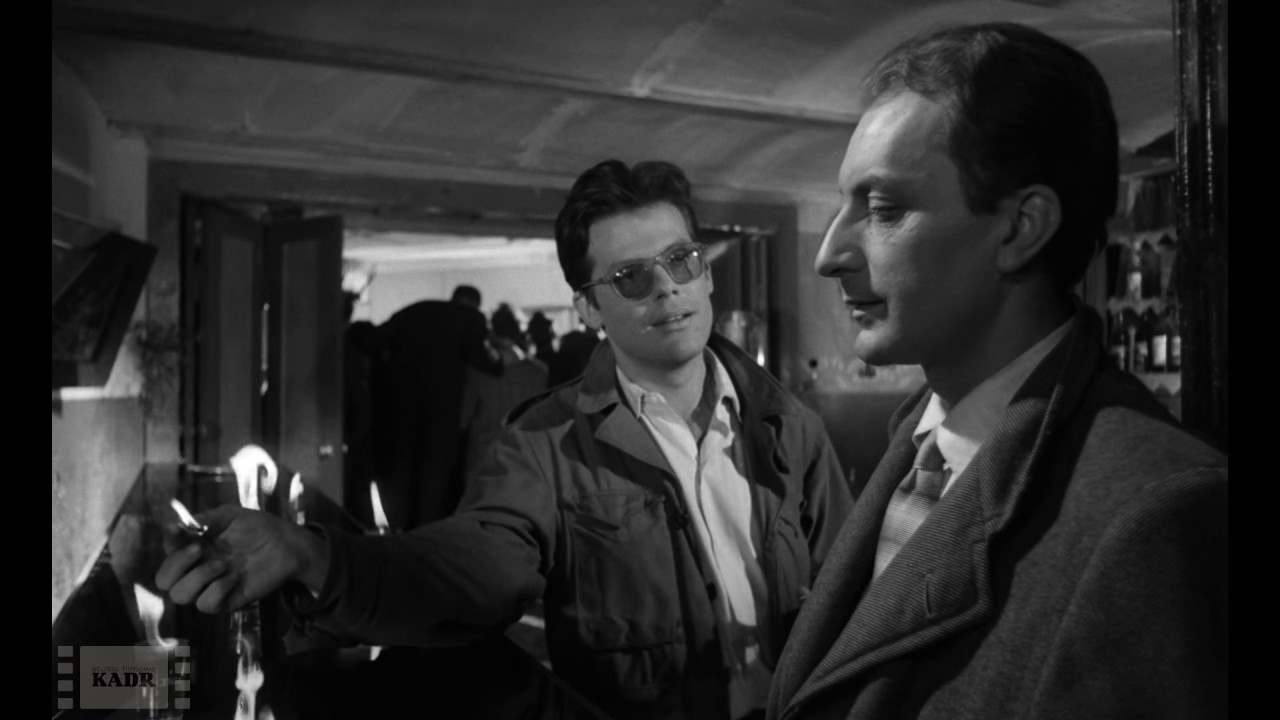
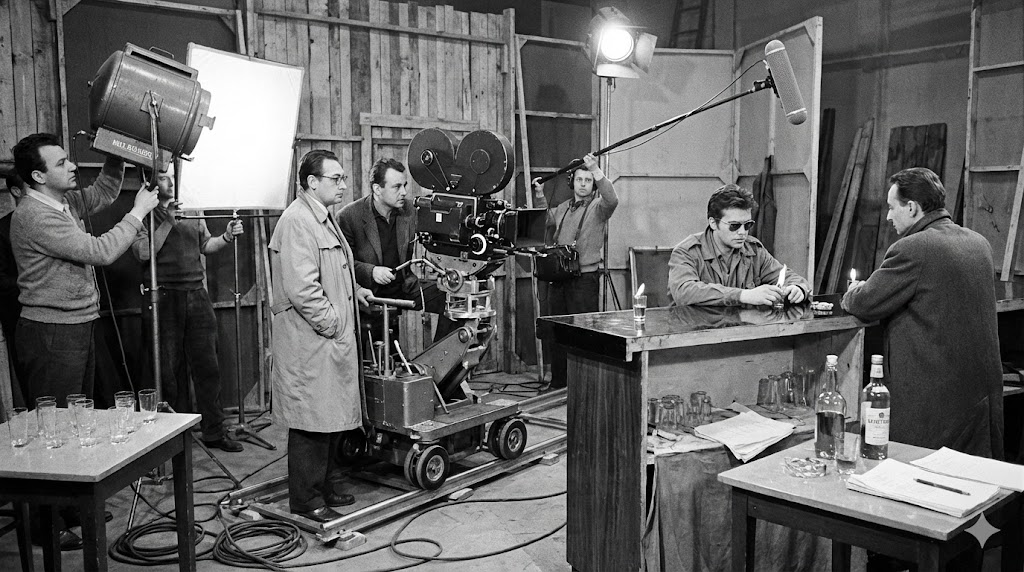
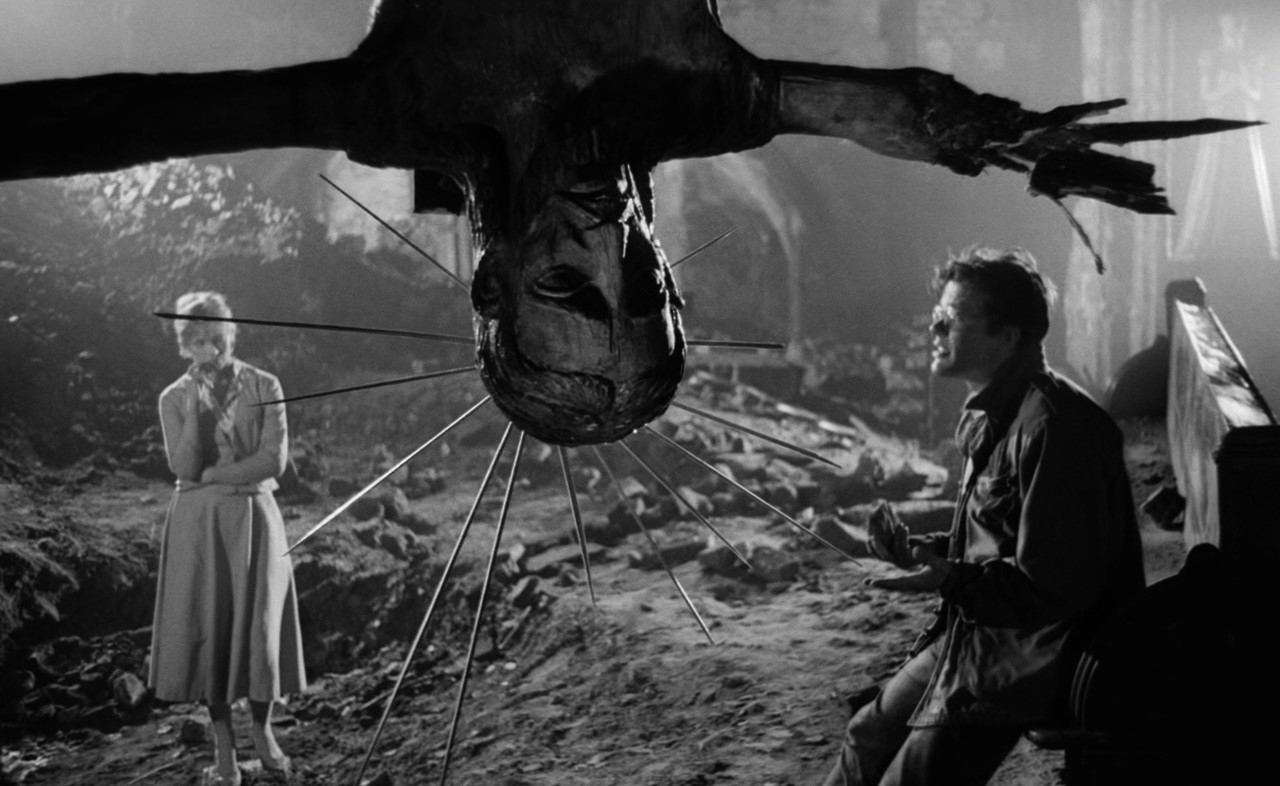
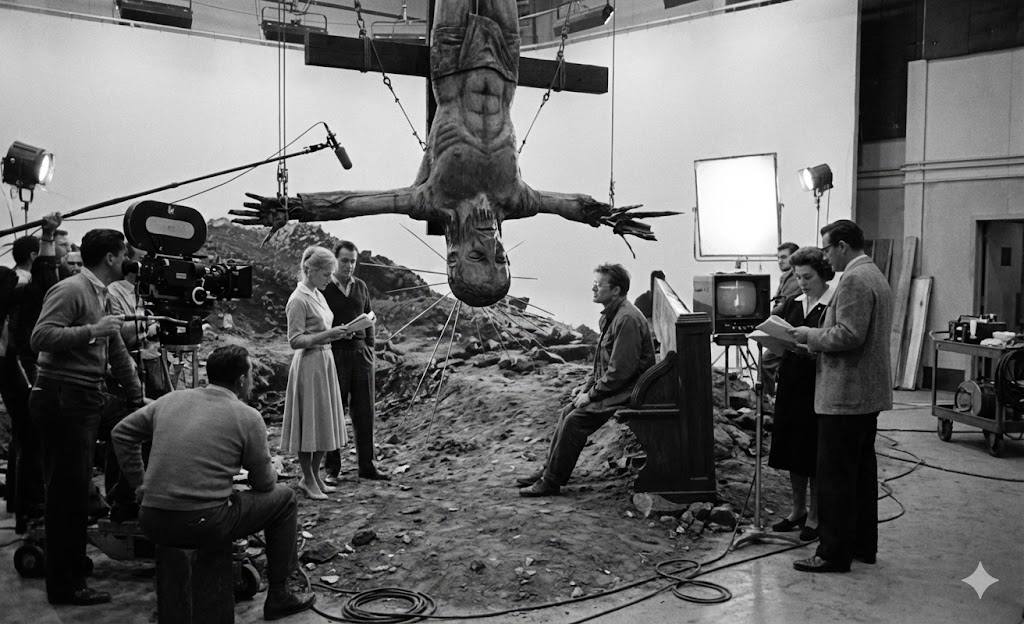
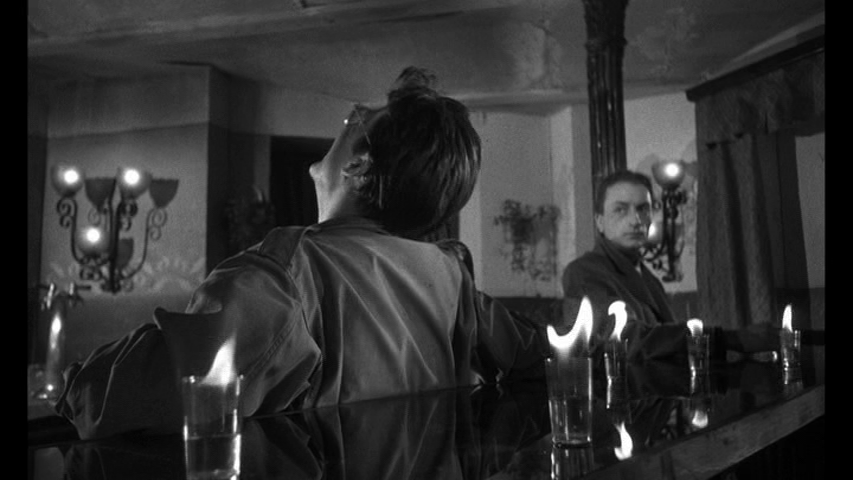
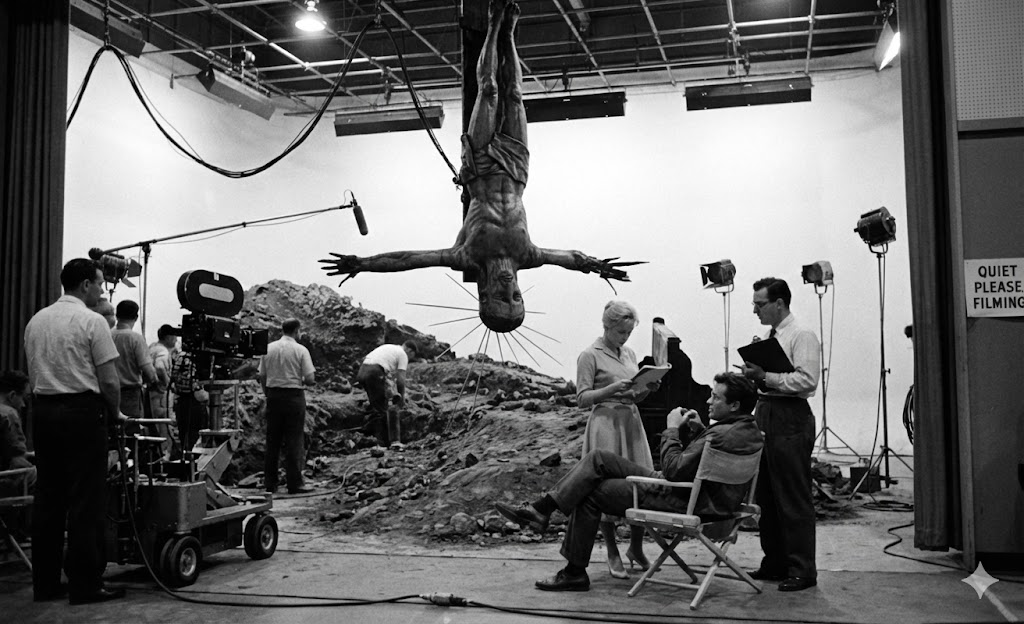
When Google released the Nano Banana Pro model, I was genuinely captivated by its capability to visualize backstage setups from Andrzej Wajda's 1958 masterpiece Popiół i diament (Ashes and Diamonds). By analyzing original film frames, captured by the legendary cinematographer Jerzy Wójcik and featuring Zbigniew Cybulski, the model promised to reconstruct what was happening outside the camera's frame.
The interactions appeared effortless. A simple prompt, "Show me backstage of this scene please", seemed to unlock sophisticated spatial understanding. The visual results were undeniably impressive.
However, after sharing this work on LinkedIn, I received thoughtful critical feedback from experienced cinematographers, filmmakers, and film industry professionals. Their insights were invaluable, revealing limitations that deserve serious examination. They pointed out that beneath the surface plausibility of these images lie fundamental problems about accuracy, historical authenticity, and the difference between what looks convincing and what is actually correct.
The Core Problem: Anachronistic Elements and Technical Impossibilities
The most striking critique from film professionals concerned elements that appeared in the AI reconstructions: specifically, something resembling a modern greenscreen setup in what should be a 1958 backstage scene.
This is fundamentally problematic. Chroma key technology, greenscreen as we know it, did not exist in 1958. Yet the AI proposed it as part of the likely setup. This reveals a critical failure mode: the model synthesizes outputs from statistical patterns in its training data, dominated by contemporary film production, and projects those solutions onto historical contexts where they were technologically impossible.
The AI isn't genuinely "reconstructing" 1950s filmmaking. It's pattern-matching based on what appears most frequently in its dataset, then dressing those patterns in period-appropriate language. When professionals familiar with the actual constraints of that era spotted the anachronism, it exposed something important: impressive visuals do not equal accurate reconstruction.
This should generalize to a broader concern: if a model can confidently hallucinate impossible technology for a specific historical moment, how reliable are the other technical details it proposes?
The technology reveals the craftsmanship beneath the art. And in Popiół i diament, one of cinema's most visually sophisticated works, that craftsmanship is extraordinary. Wójcik's cinematography is a masterclass in visual storytelling, and now we have a tool that can help us understand the workshop where that mastery was practiced.
The Lighting Problem: What Looks Good in Render ≠ What Photographs
The second critique was equally revealing. Film professionals noted that even if the proposed lighting arrangement appears logical and aesthetically coherent in an AI render, it may bear little resemblance to how the scene would actually appear in front of a camera.
This is AI not replacing human creativity, but augmenting human understanding. We can now study the filmmaking techniques of that era with a clarity that would have required access to production stills, behind-the-scenes photography, or interviews with surviving crew members.
Jerzy Wójcik was a master of light. He worked with specific equipment, film stocks, and optical constraints unique to 1958. A lighting arrangement that "looks right" in a digital render operates under fundamentally different physics than light behaving on actual film emulsion.
The AI's proposal does not account for:
- Optical properties of 1950s lenses, their specific distortions, aberrations, and characteristic optical signatures
- Film stock sensitivity and response, how black-and-white emulsion of that era rendered light, shadow, and contrast
- Real-world light behavior, bounces, diffusion, edge falloff, and unexpected shadows that emerge when light interacts with actual geometry and materials
- The difference between synthetic rendering and photographic capture, a camera records reality differently than an algorithm renders it
Cinematography is applied physics. A cinematographer thinks in terms of wavelengths, exposure latitude, dynamic range, and the precise way light registers on emulsion. Wójcik's genius lay partly in his deep intuition for these constraints and how to work within, and creatively against, them. An AI model, trained on digital renderers, possesses no genuine understanding of photographic reality.
Reframing the Technology: From "Reconstruction" to "Interpretation"
This pushback forced me to reconsider what I was actually seeing. These images are not photorealistic reconstructions of the 1958 set. They should not be treated as definitive documentation.
Instead, they represent stylistically plausible interpretations of the era's filmmaking aesthetic. The AI captured something of the spirit of 1950s cinema: the dramatic contrasts of Wójcik's lighting, the careful camera positioning, the general topography of a studio set. That has real value.
But the technical specifics, precise equipment placement, exact light sources, actual photographic behavior, these are areas where the AI essentially invents. It fills gaps with statistically probable guesses dressed in period styling.
This distinction matters enormously.
Where AI Actually Adds Value
When understood within its real limitations, Nano Banana Pro serves several legitimate purposes:
Educational tool for film students: The reconstructions help students visualize that cinema is a constructed, engineered medium. Seeing a backstage proposal encourages thinking about decisions, logistics, and planning. It teaches students to ask: "How was this made? What constraints were the filmmakers working within?"
Inspiration for contemporary filmmakers: By studying Ashes and Diamonds through this interface, one can contemplate Wójcik's artistic choices and lessons applicable to modern work. The tool becomes a bridge for studying the masters, even if it doesn't perfectly reconstruct their literal methods.
Complement to historical research: When behind-the-scenes photography from a 1958 production is scarce, AI-generated imagery can offer plausible context, a visual companion to period accounts, production notes, and crew interviews. But it should never be the primary historical source.
What it is NOT: A definitive historical record. A precise engineering document. A reliable guide to specific technical choices. A replacement for expert cinematographic analysis.
The tool can inspire questions. It should not be mistaken for answers.
The Broader Lesson: AI Confidence as a Liability
One of the most insidious aspects of advanced generative AI is its surface plausibility. These models generate outputs that look authoritative, detailed, and correct. For viewers without deep domain expertise, the visual polish and apparent attention to detail can be genuinely convincing.
But confidence in the render should not be confused with confidence in accuracy. The AI can generate a plausible-looking greenscreen proposal for a 1958 Polish film set with the same apparent certainty it would if that technology had actually existed. A non-expert observer might never spot the anachronism. A cinematographer recognizes it immediately.
This is why feedback from practitioners, people who actually work in film, is so valuable. They possess intuitive knowledge to sense when something is wrong, even when they can't immediately articulate why. Their skepticism isn't rejection of technology; it's expertise protecting the integrity of historical understanding.
I am grateful to the filmmakers and cinematographers who took time to engage critically with my initial enthusiasm. Their pushback didn't diminish my interest in AI as a tool for film education, it refined and deepened my understanding of what this technology actually offers and where its boundaries truly lie.
About the Film
Popiół i diament (Ashes and Diamonds, 1958), directed by Andrzej Wajda and photographed by Jerzy Wójcik, is considered one of the masterpieces of world cinema. Starring Zbigniew Cybulski, it explores Polish identity and political conflict in the aftermath of World War II. Its visual sophistication remains unmatched nearly 70 years later.
Original film frames are the property of Studio Filmowe Kadr and are used here for critical analysis and educational purposes.
About the Technology
Google Nano Banana Pro is the latest evolution in generative AI, powered by the Gemini 3 model. Unlike previous iterations, it features a physics-aware reasoning engine capable of understanding complex spatial relationships and "planning" a scene before rendering it. This allows for the high-fidelity reconstruction of off-screen environments demonstrated in this article.
Continue the Conversation on LinkedIn
Interested in how AI can support, and where it falls short in, our understanding of cinema history? I invite you to share your perspectives. Film professionals, cinematographers, and historians: your expertise is essential to ensuring we deploy these tools responsibly.
Connect on LinkedInJoin the conversation with digital professionals exploring AI, cinema, and the intersection of technology with creative fields.